
Northeast Drought Update
Posted October 22, 2026
U.S. Drought Monitor
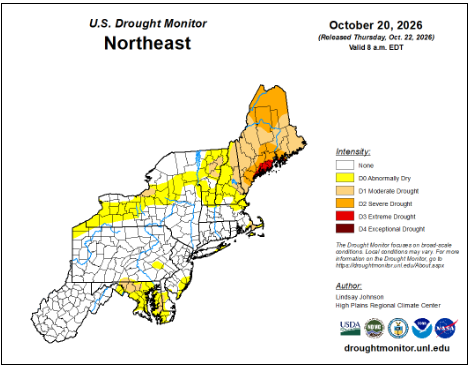
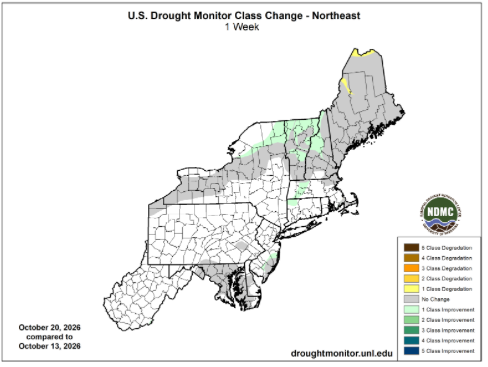
Drought and abnormally dry conditions improved or were unchanged in most of the Northeast this week. Moderate drought contracted in Vermont and New Hampshire, while abnormal dryness was removed from Connecticut and eased in portions of New Jersey, western Massachusetts, central Vermont, and northern New York. In fact, Connecticut became free of drought and abnormal dryness for the first time since September 2024. However, conditions deteriorated in northern Maine, where severe drought coverage increased. The U.S. Drought Monitor released on October 22 showed 1% of the Northeast in extreme drought, 7% in severe drought, 12% in moderate drought, and 20% as abnormally dry compared to 1%, 7%, 14%, and 21%, respectively, last week. Noticing impacts from dry conditions in your area? Reports can be submitted online via the Condition Monitoring Observation Reports (CMOR) website.
For more information on drought in NY & New England see the Northeast DEWS Dashboard and to learn more about assessing drought in the United States watch this video.
Precipitation
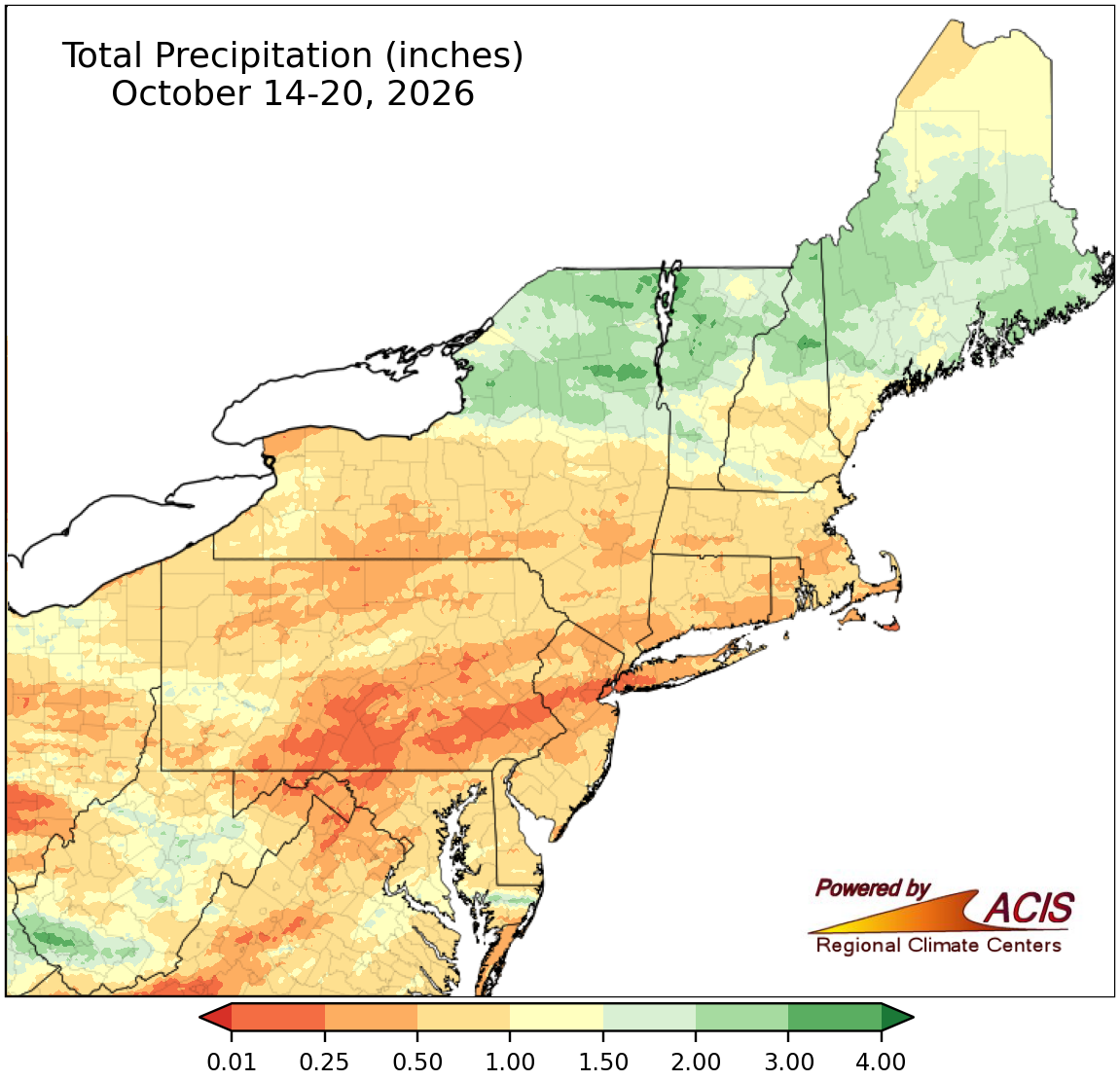
Total precipitation for the last week.
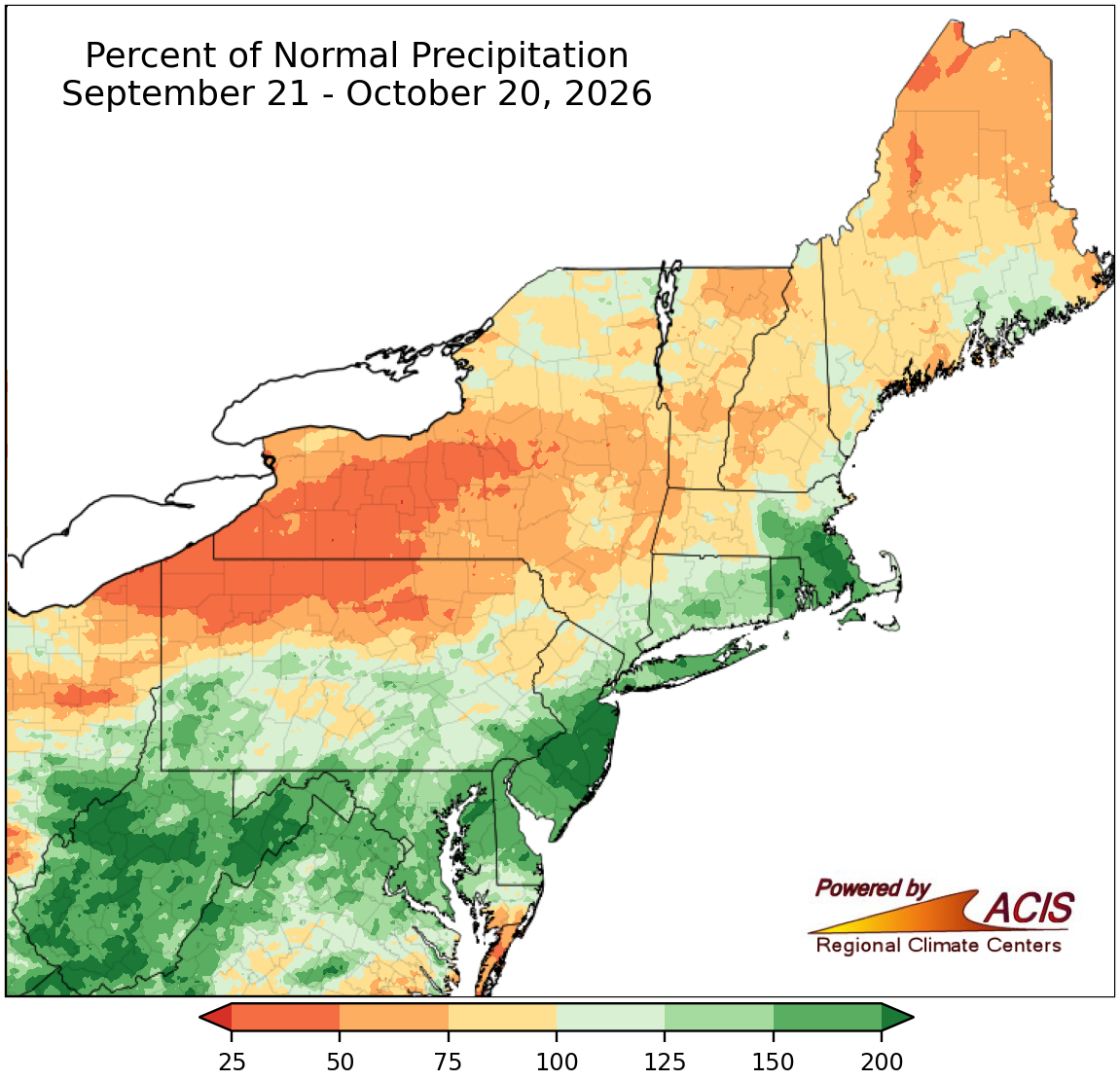
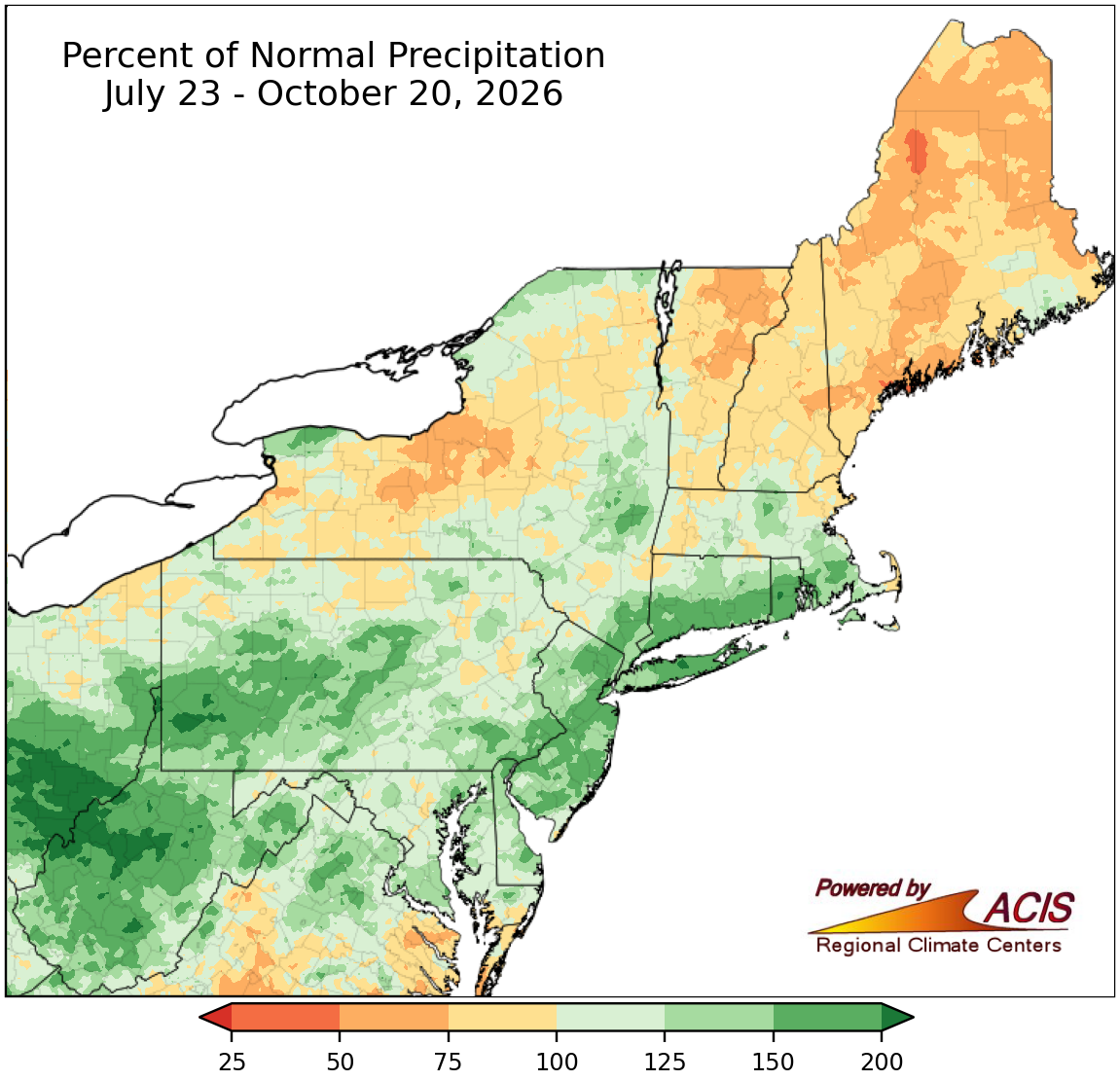
Percent of normal precipitation for the last 30-day and 90-day periods.
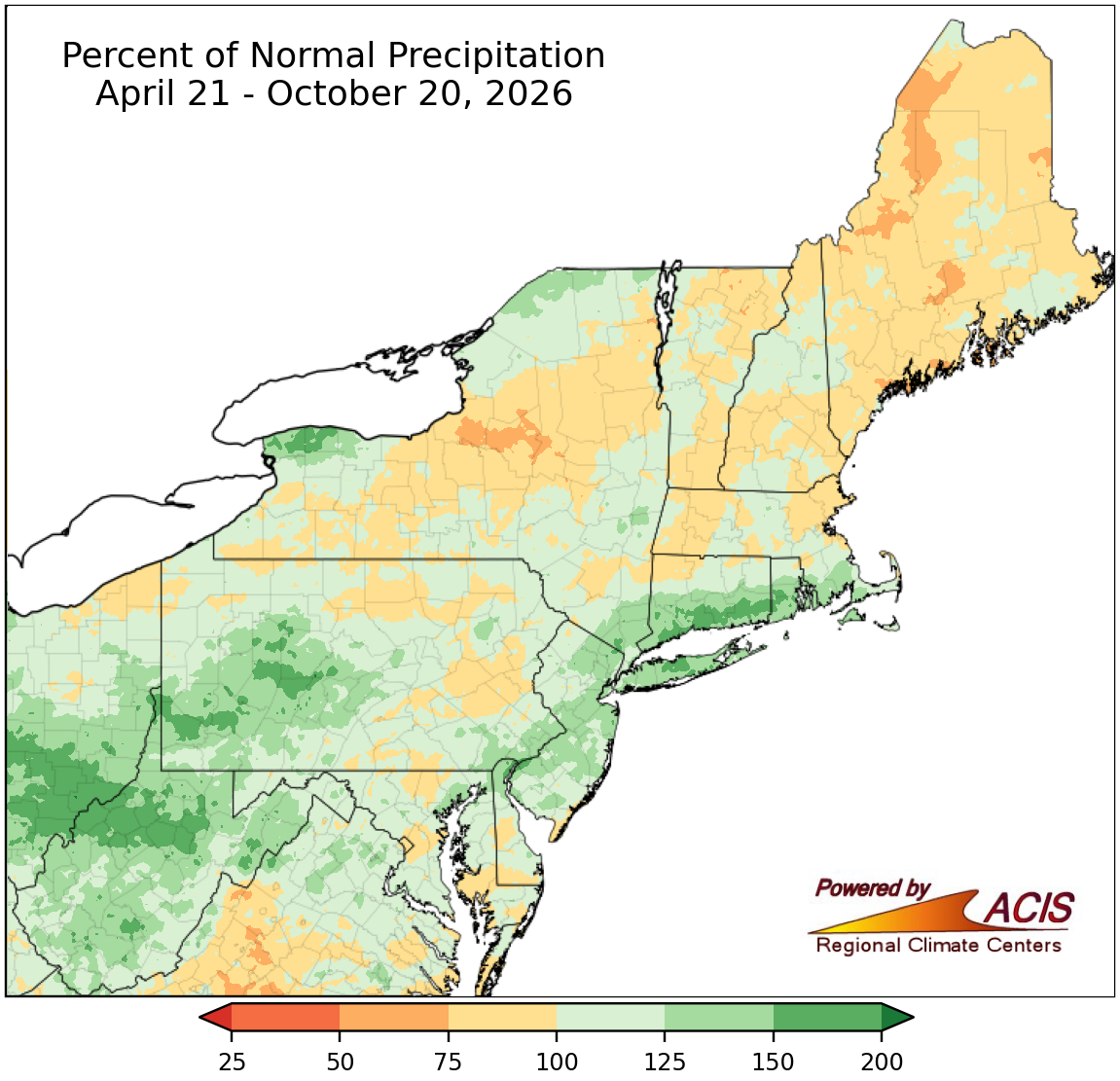
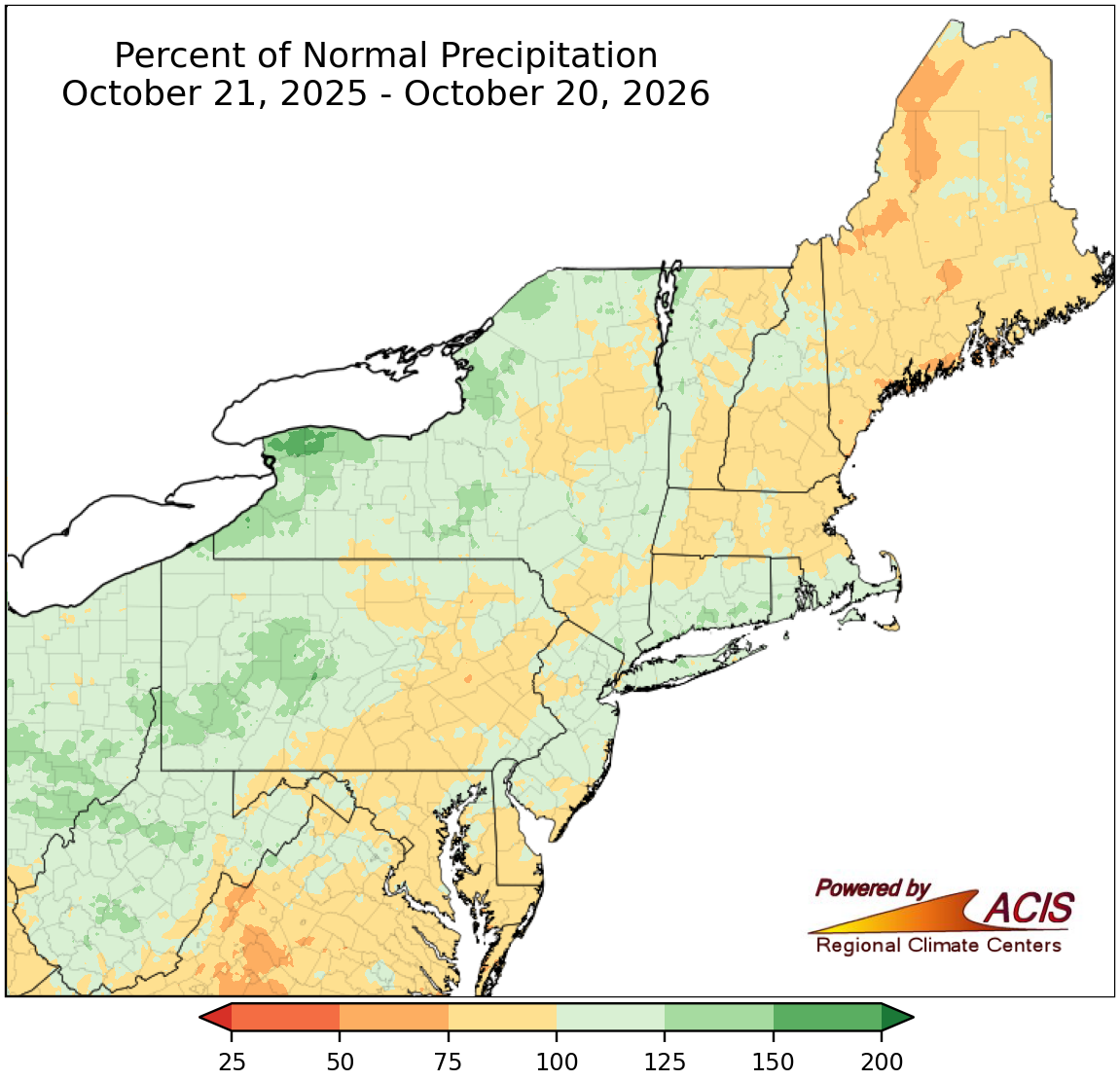
Percent of normal precipitation for the last 6-month and 1-year periods.
Water Resources
As of October 20, USGS 7-day streamflow was below normal or lower in places like Maine, central New York, northwestern Pennsylvania, and central Maryland, with record low flows in parts of Maine. However, streamflow was normal or higher for much of the Northeast. USGS groundwater levels as of October 20 ranged from record low in several areas including southern Maine, southeastern Massachusetts, central New York, southern New Jersey, and southern Maryland to record high in spots like northern West Virginia, southwestern Pennsylvania, northeastern New Jersey, and southern Rhode Island. There have been more than dozen reports of dry wells in Maine since October 11. Lakes and reservoirs in Maine are also lower than normal. Water conservation continued to be encouraged in multiple locations, with some communities having mandatory water restrictions.
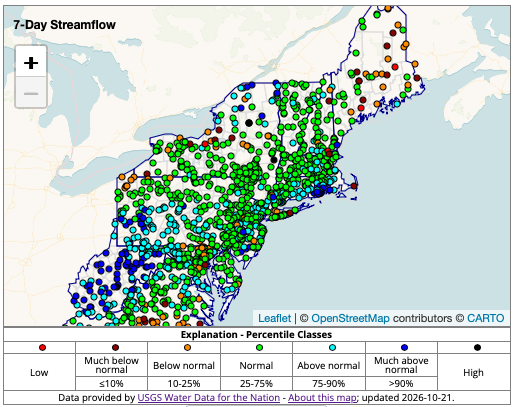
7-day average streamflow compared to historical streamflow from USGS WaterWatch
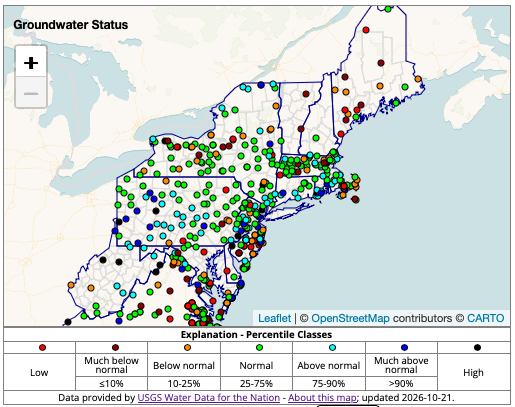
A network of wells to monitor the effects of droughts & other climate variability on groundwater levels. USGS Groundwater Data
State Declarations

Outlooks
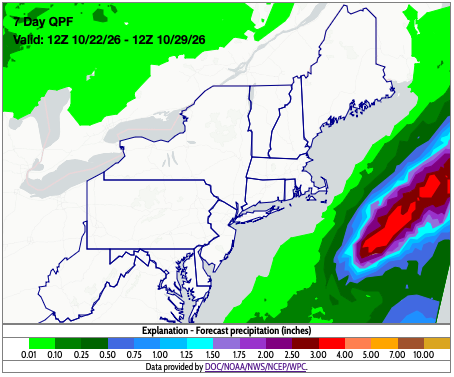
Seven-day precipitation forecast calls for no measurable precipitation for the entire region. This forecast is of concern for areas that are currently abnormally dry or in drought already.
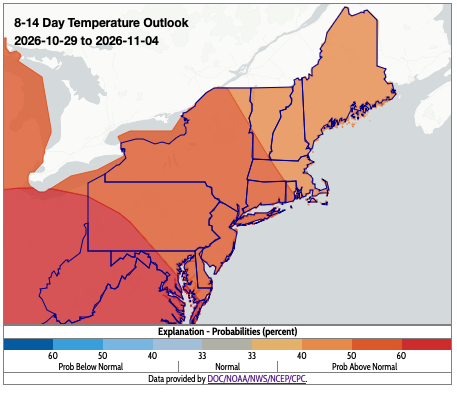
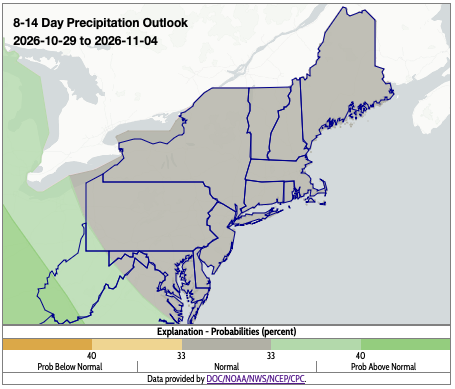
NOAA’s Climate Prediction Center (CPC) 8-14 day outlook for October 29 – November 4 favors above-normal temperatures for the entire region, with probabilities increasing southward. The outlook favors near-normal precipitation for most of the region and favors above-normal precipitation for a majority of West Virginia and the southwest corner of Pennsylvania.
The maps on this page, and additional drought resources, can also be found on the Northeast DEWS Dashboard.
About Northeast Drought
This page offers drought information by state, with links to regional and national drought web pages.