
Extreme Heat and Severe Storms Usher in July
July kicked off with a significant heat wave in the Northeast. The highest temperatures were in the 90s and 100s, and lows remained in the 70s and 80s, setting several heat records in the region. Combined with unusually high humidity, it felt as hot as 118°F in some locations. Dozens of heat-related emergencies and multiple deaths were linked to the hot weather.
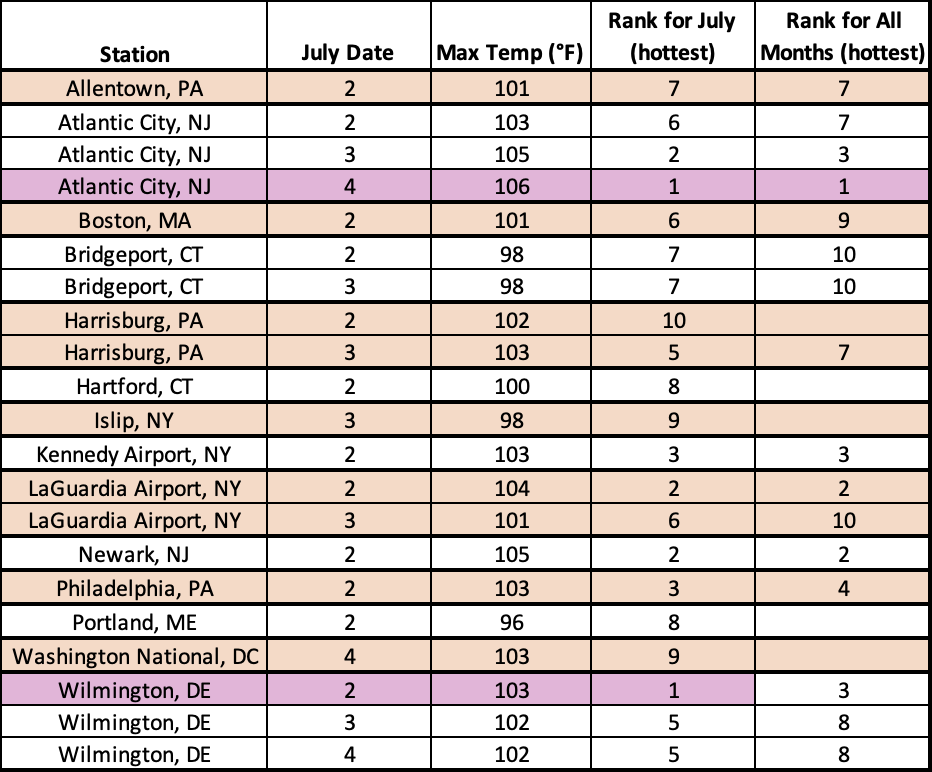
Atlantic City, NJ, tied its all-time hottest temperature, while Wilmington, DE, tied its hottest July temperature.
High temperatures exceeded 100°F primarily near the Interstate 95 corridor from Washington, D.C., to Boston, MA. Wilmington, DE, reached a high of 103°F on July 2, tying its hottest temperature for July since its records began in 1894. With a high of 106°F on July 4, Atlantic City, NJ, tied its all-time hottest temperature since its records began in 1943. Overall, 14 of the Northeast’s 35 major sites recorded high temperatures that ranked among their 10 hottest for July, with 10 of those sites having highs that ranked among their 10 hottest temperatures for any month.
Atlantic City recorded three straight days with a high of 103°F or higher for the first time on record, while Philadelphia, PA, had three consecutive days with a high of 101°F or higher for the first time on record. The sites also had their greatest number of days with a high of at least 103°F and at least 101°F, respectively, for any month on record. Meanwhile, this July was the only July on record to have three consecutive days with a high of 102°F or higher in Wilmington.
Other notable records included:
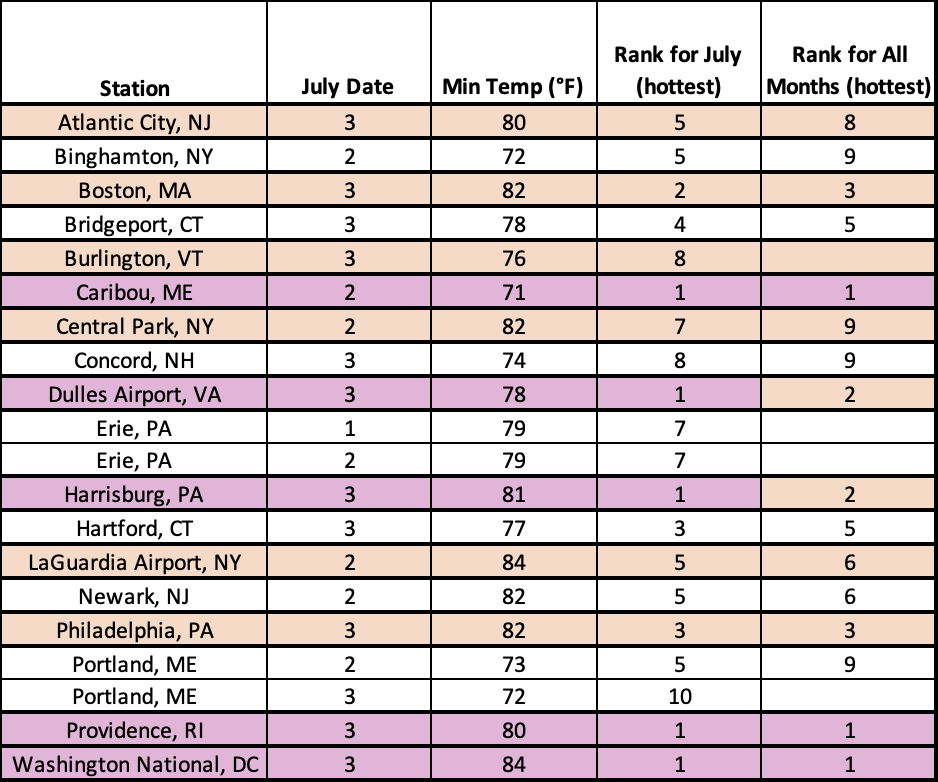
Five major sites set/tied their hottest low temperatures for July, with lows at three of the sites also ranking as the all-time hottest.
Low temperatures at five major sites - Washington, D.C.; Providence, RI; Harrisburg, PA; Dulles Airport, VA; and Caribou, ME - ranked as the hottest on record for July. In fact, these lows tied as the all-time hottest low temperatures on record at three of the sites - Washington, D.C, with 84°F (records to 1871); Providence with 80°F (records to 1904), and Caribou with 71°F (records to 1939). July 2026 is now the only July on record to have a low of at least 80°F in Providence. At 18 of the region’s 35 major sites, low temperatures ranked among the 10 hottest for July, with 16 of the sites having lows that ranked among their 10 all-time hottest. Other notable records include:
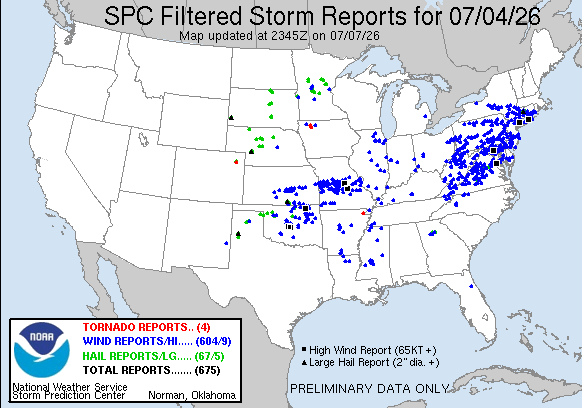
On July 4, there were widespread reports of wind damage (blue dots) from severe thunderstorms.
Severe weather struck a portion of the Northeast each day of the heat wave, with July 4 being particularly noteworthy. There were hundreds of wind damage reports, with a majority in the Mid-Atlantic. Wind gusts of 87 mph and 81 mph were measured in Suffolk County, NY, and Carroll County, MD, respectively. Downed trees in parts of Pennsylvania and southeastern New York contributed to prolonged power outages, numerous road closures, severely damaged homes, and a few fatalities and injuries. PPL Electric, which services roughly 1.5 million customers across 29 counties in Pennsylvania, noted that the storm event was one of the 10 most significant in the company’s history. A 3-inch hailstone was reported in Connecticut, with preliminary data indicating the hailstone could be among the state’s largest. A frontal system pushed into then stalled across the region, gradually bringing relief from the heat but also providing a focal point for torrential rainfall and flash flooding.
More information on the heat wave and severe storms will be included in the NRCC’s webinar on July 30 and July summary expected to be released around August 11.